RESEARCH
How education is linked to the labour market. Exploring students' pathways from study to work and their experiences.
ASSESS
VET systems in Russia and the world. We compare approaches in different countries and analyse their effectiveness.
PROJECT
Strategies to enhance vocational education. We develop recommendations based on research data.
Outline of Our Studies
-
EDUCATION AND LABOUR MARKET
- Interaction between educational institutions and employers
- The alignment of educational programmes with the requirements of the labour market
- The impact of vocational education on economic and social development
-
VET IN RUSSIA AND THE GLOBAL CONTEXT
- A comparative analysis of vocational education systems in different countries
- A review of educational policy at the national and international levels
-
EDUCATIONAL AND OCCUPATIONAL PATHWAYS
- Research on transitions between study and work
- Analysing the educational and career pathways of students and graduates
-
CURRICULUM AND SKILLS DEVELOPMENT
- Research on students' experiences of vocational education and training
- The development of general and vocational competencies
- A review of methodologies for skills development
Expertise and Consulting Areas
01
Strategic consultancy
We assist authorities, businesses, and educational institutions in the creation of modern vocational education systems that train specialists for the real needs of the economy—both today and in the future.
02
Designing educational ecosystems
We devise data-driven strategies for the advancement of vocational education in regions and industries. We devise plans for the renovation of educational institutions, with the objective of enhancing their efficiency.
03
In-depth research and analytics
We conduct research into the relevance of education to employers' needs, the careers of graduates, and the educational experience of vocational students. We employ a range of techniques, including surveys, interviews and data analysis, to gain insight into the subject matter. The results facilitate improvements in the efficiency of education for students and the economy.
Our Applied Projects
-
Developing the concept of a student campus in Tarko-Sale
A team from HSE University devised educational and architectural concepts for the Regional Centre for Personnel Training for the Fuel and Energy Complex. The project was awarded first prize in the Space of the Future competition at the ‘Russia’ exhibition.
Customer: Department of Education of the Yamalo-Nenets Autonomous District, 2023.
-
Modernisation of methodological services in Moscow
A three-level structure of methodological support was developed: the Regional Centre for Vocational Education Development, sectoral competence centres, and colleges. The work included updating the functionality and motivation system of methodologists and trainees, selecting and training specialists to work in the new system.
Customer: Department of Education and Science of the City of Moscow, 2023–2024.
-
Formulation of a strategy for the development of lower post-secondary vocational education
As part of the project ‘Development Strategy for Lower Post-Secondary Vocational Education in Taymyr’, an analytical study of the vocational education system at the municipal level was conducted in the context of demographic, migration, and socio-economic factors related to the development of the territory. Based on the results of the study, a strategy for the development of vocational education in Norilsk and the Taymyr Municipal District was developed to meet the current challenges of the vocational education system in the Arctic zone.
Customer: Norilsk Development Agency, 2024.
-
Formulation of a model for the development and assessment of general competences in TVET
A system for the development and assessment of key competences in higher education students was created. The project contributes to the training of graduates for work in dynamic labour market conditions. Developed as part of the Young Professionals Programme to strengthen the practical orientation of vocational education.
Customer: Ministry of Education of the Russian Federation, 2020
-
Map of promising careers for young people
The centre developed a method to identify in-demand occupations and created 100 profiles for the Ticket to the Future project. These profiles help students choose a career and get up-to-date information about the labour market. The specifics of identifying promising professions were discussed on RBC.Trends.
Customer: Young Professionals (Worldskills Russia), 2020.
-
Creation of applied bachelor's degree programmes
In partnership with the Laboratory for University Development, the centre has been involved in the creation of new educational programmes. They combine theoretical training with practical skills, allowing graduates to quickly start their careers. These programmes will help universities train specialists who better meet the requirements of employers and adapt more quickly to real working conditions.
Customer: Ministry of Education and Science of the Republic of Tatarstan, 2019
Research Projects
-
Comparison of vocational education and training systems in different countries
A method for evaluating secondary vocational education systems based on WorldSkills approaches was developed. Its application to compare vocational education in different countries makes it possible to improve education, taking into account international experience. The results were presented to education ministers at WorldSkills Kazan 2019. The project was evaluated by experts from Australia, the Netherlands, the UK, and Russia.
‘Young Professionals’ Union (Worldskills Russia), 2019.
-
CodeVET: Comparison of Vocational Education and Training Programmes
An international project on competence development in secondary vocational education. Together with the Universities of Osnabrück, Cologne (Germany) and Tongji (China), the centre compared vocational education and training in Russia and China. It carried out extensive research and developed a new method for analysing training programmes. The results of the study are presented in several articles in international journals (here and here).
Federal Ministry of Education and Research of Germany, 2019–2022.
-
Scenarios for the development of Russian education
As part of a large-scale project to assess the prospects of the Russian economy and society, an analysis of the development of vocational education up to 2030 was prepared. The forecast takes into account the impact of global events on the training of specialists and is based on expert assessments and analytical data. This study provides a holistic view of the future of lower post-secondary vocational education in a changing environment.
HSE University, 2023–2024.
-
Educational and occupational pathways of university graduates
The pathways of Russian university graduates were studied and the factors influencing the choice of different paths and their impact on careers were assessed. The project was carried out in cooperation with the Centre for Cultural Sociology and shows the connection between education and the career prospects of young people. The results of the study were published in an analytical report and a popular science article on RBC.Trends.
HSE University, 2021.
-
Educational and career paths of young people in Russia and social mobility
Together with the Centre for Cultural Sociology as part of the Russian Science Foundation project 'Recognition, Distinction and Emotional Drivers of Action: The Cultural-Symbolic Dimension of Social Mobility', the centre studied ten-year trajectories of university and college graduates, including the transition of students from college to university. Factors influencing the choice of different pathways and their impact on career and social mobility were assessed. The results are published in research articles (here and here) and in the report ‘Life After College’.
Russian Science Foundation (RNF), 2022–2024.
-
Educational experiences of VET students
The experience of studying at colleges and technical schools was researched, including students' expectations, their difficulties, important aspects of the educational environment, leisure time, and extracurricular activities. The data was collected during student expeditions, including those to Taymyr and Kamchatka. The results of the project will allow for the development of measures to improve the quality of education both in individual educational institutions and in regional VET systems.
HSE University, 2024–present.
Our Reports and White Papers

Typology of Vocational Education and Training Institutions in Russia: An Empirical Analysis


Educational Beacons of the Russian Far East: The Role of Universities and VET schools in Ensuring the Demographic Sustainability of the Region


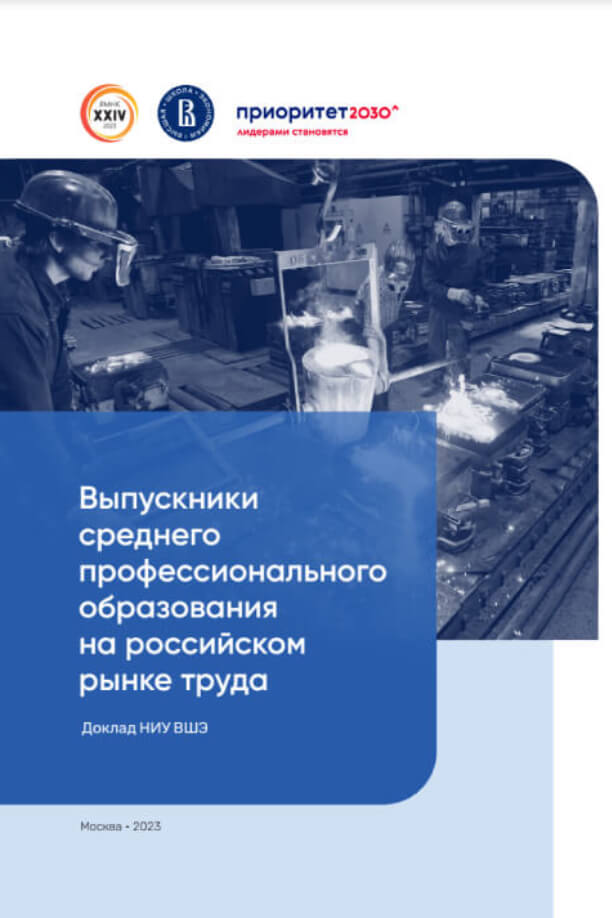
Life After VET: Educational and Career Pathways of Young People Based on Longitudinal Study Data
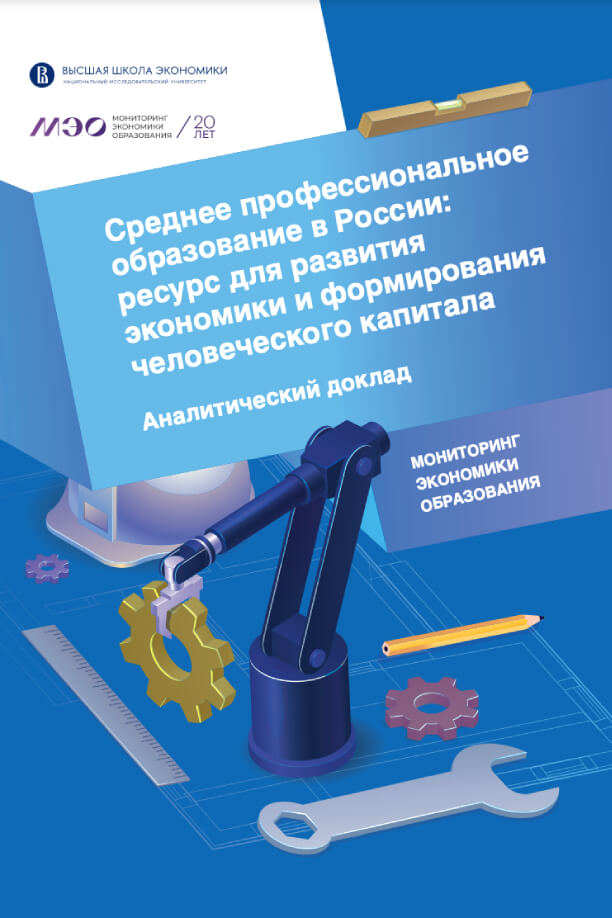
Secondary Vocational Education in Russia: a Resource for Economic Development and Human Capital Formation

Educational and Career Trajectories of Russian University Graduates: Evidence from a Longitudinal Study


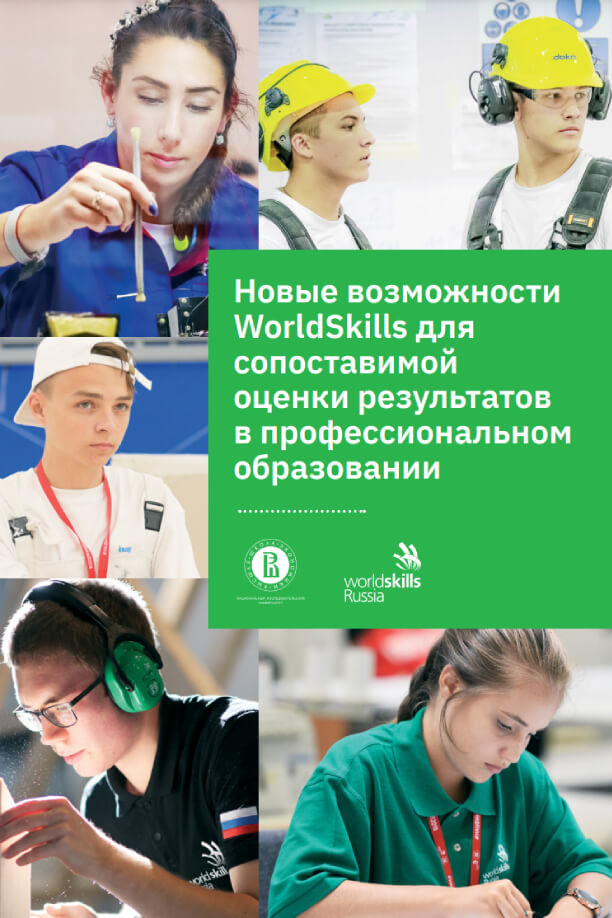
New Worldskills Opportunities for Comparable Outcomes Assessment in Vocational Education and Training


Evolution of Funding in the Vocational Education System: Toward a Public–Private Partnership
Our Expertise in the Media
The 'School → University → Work' Track Is No Longer Relevant
RBC.Trends: Vera Maltseva and Natalia Rosenfeld analyse changes in the educational and career paths of young people. They show that the traditional 'school - university - work' path is no longer typical for Russian university graduates.
How Do We Attract Practicing Educators?
EdDesignMag: Olga Romanova examines strategies for attracting practising teachers to colleges. She describes how cutting-edge educational institutions are motivating and attracting industry professionals.
Why Predictions and Lists of Jobs of the Future Are Not Always Right
RBC.Trends: In her opinion piece, Vera Maltseva discusses the limitations of predictions about ‘jobs of the future’. She suggests approaches to choosing a profession and building a career in conditions of incomplete information about labour market prospects.
Educational Programmes and Projects Involving the Centre’s Experts
Events Involving the Centre's Experts
Nekrasovskaya library
Discussion: ‘A Pass to Life: Expectations and Reality of Higher Education'
Moscow International Education Fair (MMCO)
Discussion ‘Big Cities: The Race for New Skills'
Specialised Units within the Centre
Laboratory for Human Capital and Education Research
Laboratory Head: Pavel Sorokin
E-mail: psorokin@hse.ru
Centre Team

Director of the Centre, Senior Research Fellow

Research Fellow

Leading Expert

Leading Expert

Expert

Junior Research Fellow

Junior Research Fellow, Doctoral Student

Research Assistant, Doctoral Student

Research Assistant, Doctoral Student

Research Assistant

Research Assistant

Research Assistant

Research Assistant
News
-

-

-
.jpeg)
October 09, 2025
Study of First-Generation Students Presented at the ECER Conference
-

-

April 30, 2025
Professor Santosh Mehrotra's Visit to Moscow
Publications
-
Book
Management practices of Russian companies. Vol. 1
This collection of compact cases on management practices in Russian companies was produced by professors of HSE Graduate School of Business and other units of HSE University and resulted from a joint project between HSE GSB and The Case Centre, the one of the top case clearing houses globally. The cases in this volume reflect on a wide range of the current issues in business management, such as Strategic Management, Business Innovation, Supply Chain Management, Brand Management, ESG and Business Ethics, Talent Management, Entrepreneurship, as well as doing business during the COVID-19 pandemic.
This case collection is recommended for students, participants and faculty of various programs in management — from Bachelor and Master to MBA and Executive Education.
Recommended for publication by the Academic Council of the Graduate School of Business, National Research University Higher School of Economics.M.: Higher School of Economics Publishing House, 2022.
-
Article
The Silent Frontier: Vocational Education and Its Marginalization in the Sociology of Education
This conceptual paper examines why vocational education and training (VET/TVET) remains marginal within the sociology of education despite its central role in contemporary education systems and youth transitions. It identifies epistemological, institutional and methodological blind spots and proposes a cultural–organizational framework as a conceptual language that allows the study of any kind of education by engaging with actors’ meanings as well as institutional arrangements.
The paper draws on an analytical literature review and discussion of sociological,TVET and youth studies scholarship. It sides with recent suggestions made in sociology of education to move beyond the focus on an individual and to take institutions into account. It proposes using Amy Binder’s cultural–organizational approach as a lens to reconceptualise TVET as a site of identity formation rather than merely technical skills provision.
The paper identifies three interlinked mechanisms of marginalisation: (1) a historically entrenched focus on academic schooling and higher (also academic) education at the heart of sociology of education; (2) the dominance of inequality research that surprisingly treats TVET mainly as a residual track for the disadvantaged; and (3) epistemological hierarchies that privilege abstract, academic knowledge over vocational and practice‑based epistemologies. It argues that TVET is better understood as a culturally and organizationally embedded institutional field that produces subjects, aspirations and social boundaries and outlines how a cultural–organizational approach can be extended from universities to vocational institutions.
As a conceptual paper, the article does not present original empirical data and is limited by the scope of selected literatures. It outlines a research agenda for the sociology of education that would allow inclusion of the sociology of TVET into general discussions structuring the field.
The neglect of TVET in the sociology of education reinforces the devaluation of working‑class knowledge, practices and skills and obscures how vocational tracks structure life chances, identities, aspirations and social mobility within the system. Integrating the sociology of vocational education into general sociology of education supports more equitable recognition of diverse educational trajectories and informs policies that address classed, gendered and racialised inequalities within and through TVET systems.
The paper offers a conceptual intervention that highlights TVET as a silent frontier in the sociology of education. By suggesting a cultural–organizational approach as a common conceptual vocabulary, it shows directions of development both for sociology of education as a whole and sociology of vocational education in particular, thereby broadening the conceptual repertoire of the field.
Education and Training. 2026.
-
Book chapter
Higher education system development in Russia. In search of increasing contribution to socioeconomic transformation
This chapter looks at the transformations of the Russian higher education system with special attention to the most recent years, beginning from 2020. Currently, socioeconomic development is problematic, and the external pressures (international sanctions and risks of “brain drain” as well as social tensions) are unprecedentedly high, which demands that higher education institutions produce a greater impact on economic growth, technological modernization, and social cohesion. Instead of one-sided integration in the international field and adaptation of Western approaches to policies and procedures (i.e., Bologna process), new models of policymaking are principally being launched. The priority for higher education policy now is engaging students and young scholars in both world-class fundamental research and applied projects. Participation in research and development activities becomes an essential and obligatory part of the education process. These are the core features of the program “Priority 2030” (issued in 2021). The chapter further looks at other key initiatives in higher education policy, including the federal project “Platform of University Technological Entrepreneurship” and the “World Class Research Centers” project, demonstrating a variety of ways how higher education institutions are being pushed toward producing more impact by, for instance, generating tens of thousands of students start-ups and launching university start-up studios.
In bk.: Transformations of Higher Education in BRICS. Policy, Procedures, and Practice. Abingdon: Routledge, 2025. Ch. 6. P. 105-135.
-
Working paper
WorldSkills Approaches to Comparable Skills Assessment in Vocational Education
This report aims at discovering the capacity of WorldSkills approaches in objective and comparable skills assessment in vocational education. Authors study the best practices of the four countries (Russia, Australia, United Kingdom, Netherlands) in embedding WorldSkills standards and procedures to national TVET systems. Prospects of WorldSkills approaches to objective skills assessment in building internationally comparable skills assessment in TVET are discussed. This report was produced at the initiative of the Union “WorldSkills Russia” in partnership with representatives of the WorldSkills movement in Australia, the Netherlands and the United Kingdom. This paper shall be of interest for researchers and experts in the field of technical and vocational skills assessment, managers and policy-makers in technical and vocational education (TVET).Современная аналитика образования. Институт образования НИУ ВШЭ, 2019