Institute of Education

Research & Expertise to Make a Difference in Education & Beyond

Tag "discussions"

When AI Levels the Playing Field—or Makes the Gap Wider

When AI Levels the Playing Field—or Makes the Gap Wider
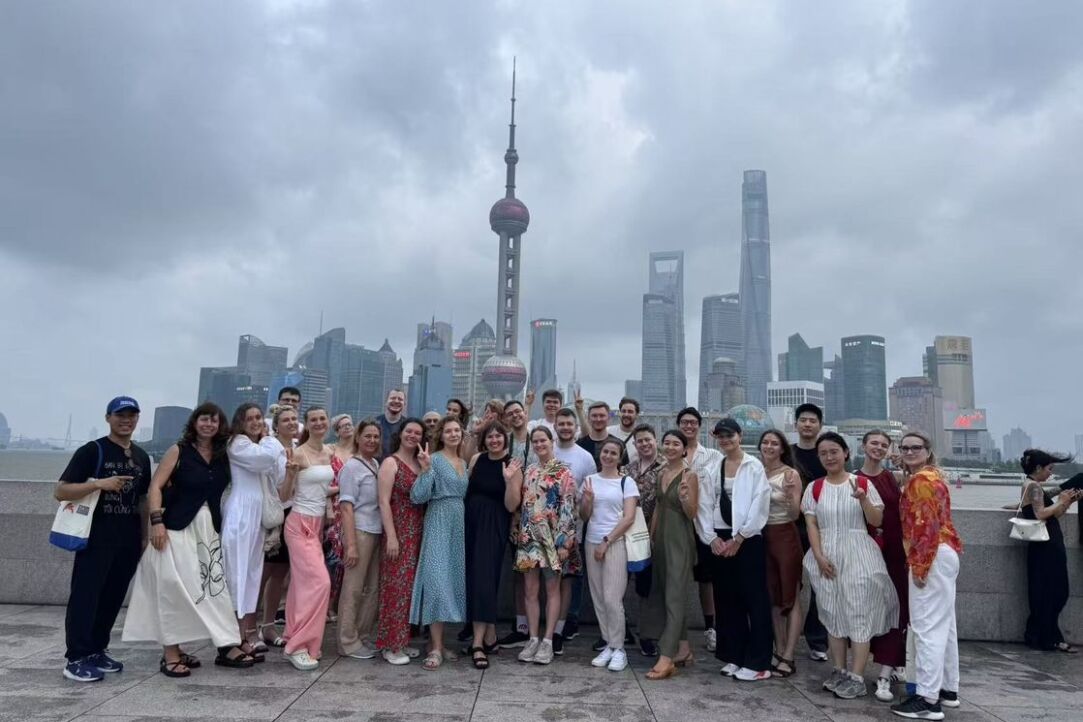
This July in Shanghai, more than 50 researchers from nine countries—from Russia and China to Canada and Singapore—gathered for the International Summer Institute on Artificial Intelligence in Education. For several days, the city became a global hub of discussion on how universities are responding to the rapid rise of AI.

The Unsung Heroes of Efficiency: How Non-Academic Staff Shape Russian Universities

AI
In their recent study, Tommaso Agasisti, Tatiana Akuneeva, Aleksei Egorov, Daria Platonova, and Pavel Serebrennikov delve into the intricate relationship between non-academic staff and the technical efficiency of Russian universities from 2012 to 2021. Featured in Applied Economics, their research challenges conventional wisdom about university operations, offering fresh insights into how administrative and support roles impact institutional performance. By employing innovative statistical methods, the authors uncover nuanced dynamics that vary between research-intensive and teaching-intensive universities, reshaping our understanding of higher education management.

Slow and Steady Wins the Race: How Adult Learners Manage Time and Achieve Success

AI
In a world where deadlines loom and procrastination tempts, a group of researchers—Kseniya Adamovich, Aleksandra Getman, Anastasia Kapuza, and Adelina Fayzullina—set out to uncover the secrets of how adult learners tackle their assignments. Their study, published in The Language Learning Journal, dives into the habits of over 70,000 English learners on an online platform, revealing surprising truths about time management, task completion, and academic success. What they found challenges conventional wisdom and offers fresh insights into the age-old question: Does slow and steady really win the race?

Bridging the Digital Divide: Crafting a Legal Future for Global Digital Platforms

AI
In their recent study, Alexey Koshel, Yaroslav Kuzminov, Ekaterina Kruchinskaia, and Bogdan Lesiv of HSE University unravel the complex challenge of regulating digital platforms across jurisdictions. Their paper, In Search of the Regulatory Optimum for Digital Platforms: A Comparative Analysis, sets out not only to dissect the legislative frameworks of key global economies but also to propose a more coherent legal language for Russia’s rapidly evolving platform economy.

The Stories We Live: How Time Shapes Our Actions and Decisions

The Stories We Live: How Time Shapes Our Actions and Decisions
Narratives We Live By: Sequentiality and Timeliness in Temporal Structuring of Action, a recent study by sociologist and cultural theorist Dmitry Kurakin, delves into the intricate ways narratives shape human behavior over time. Published in Theory and Society, the paper bridges theoretical innovation with empirical analysis, offering a fresh perspective on how individuals navigate the interplay between personal timelines and societal expectations.

“Even the Ceilings Teach You”—What We Learned in China’s Classrooms

“Even the Ceilings Teach You”—What We Learned in China’s Classrooms
A group of students, faculty, and alumni from the HSE Institute of Education’s Master’s program in Education Administration recently took part in a short-term study trip to China, where they explored the local education system. Their itinerary included visits to Tsinghua University in Beijing, East China Normal University in Shanghai, six schools, and a kindergarten.

Staying Home or Venturing Out: Academic Inbreeding and the Success of Early-Career Researchers

Staying Home or Venturing Out: Academic Inbreeding and the Success of Early-Career Researchers
In her recent study, Victoria Slepykh of IOE delves into the contentious issue of academic inbreeding and its impact on the productivity of early-career researchers in STEM fields. Academic inbreeding, the practice of scholars working at the same institutions where they earned their degrees, has long been debated for its potential to stifle innovation and limit intellectual diversity. This research offers a nuanced perspective, exploring how this phenomenon plays out in Russia’s diverse academic landscape, where inbreeding is notably prevalent.

Fair or Flawed? Generative AI Bias Perceptions from Tweets to Teams

AI
In their recent study, Evans Uhunoma and Maryann Asemota delve into how users perceive bias in generative AI outputs across two distinct contexts: the workplace and public discourse on social media. Drawing on survey data from UK-based employees and sentiment analysis of posts on X (formerly Twitter), the authors examine the extent to which generative AI systems—commonly regarded as innovative tools for content creation—may in fact reproduce or amplify existing societal biases. 

Level Up! How Gamification Is Reshaping Education—and Your Future Job

AI
Imagine if your classes felt more like a game than a grind. Badges for breakthroughs, points for participation, and friendly leaderboards that spark just enough rivalry to keep you coming back. It’s not a futuristic fantasy—it’s happening now. Gamification in education isn’t just about fun; it's becoming a strategic tool to build the very skills employers are hungry for. A recent study published in Educational Studies Moscow dives into data to show how playing games in class might just be the smartest way to land that dream job.

Locked Down but Not Defeated: A Global Snapshot of Adolescent Wellbeing During COVID-19

Locked Down but Not Defeated: A Global Snapshot of Adolescent Wellbeing During COVID-19
The COVID-19 pandemic brought about sweeping changes to daily life across the globe, none more so than for young people whose worlds were turned upside down by lockdowns, school closures, and social distancing measures. In the thick of these unprecedented disruptions, a critical question emerged: How did these abrupt changes affect the wellbeing of adolescents—those in the midst of pivotal developmental years? A study by an international research team, including Alexandra Bochaver of IOE, offers enthralling insights into the impact of the COVID-19 lockdown on school students' psychological, emotional, and social wellbeing, shedding light on both the challenges they faced and their capacity to adapt. By examining the complexities of adolescent wellbeing during such a tumultuous time in a global context, it underpins the importance of understanding how external crises influence the mental and social health of young people and the need for continued support in the face of such challenges.