Institute of Education

Research & Expertise to Make a Difference in Education & Beyond

Tag "discussions"

Fair or Flawed? Generative AI Bias Perceptions from Tweets to Teams

AI
In their recent study, Evans Uhunoma and Maryann Asemota delve into how users perceive bias in generative AI outputs across two distinct contexts: the workplace and public discourse on social media. Drawing on survey data from UK-based employees and sentiment analysis of posts on X (formerly Twitter), the authors examine the extent to which generative AI systems—commonly regarded as innovative tools for content creation—may in fact reproduce or amplify existing societal biases. 

Level Up! How Gamification Is Reshaping Education—and Your Future Job

AI
Imagine if your classes felt more like a game than a grind. Badges for breakthroughs, points for participation, and friendly leaderboards that spark just enough rivalry to keep you coming back. It’s not a futuristic fantasy—it’s happening now. Gamification in education isn’t just about fun; it's becoming a strategic tool to build the very skills employers are hungry for. A recent study published in Educational Studies Moscow dives into data to show how playing games in class might just be the smartest way to land that dream job.

Locked Down but Not Defeated: A Global Snapshot of Adolescent Wellbeing During COVID-19

Locked Down but Not Defeated: A Global Snapshot of Adolescent Wellbeing During COVID-19
The COVID-19 pandemic brought about sweeping changes to daily life across the globe, none more so than for young people whose worlds were turned upside down by lockdowns, school closures, and social distancing measures. In the thick of these unprecedented disruptions, a critical question emerged: How did these abrupt changes affect the wellbeing of adolescents—those in the midst of pivotal developmental years? A study by an international research team, including Alexandra Bochaver of IOE, offers enthralling insights into the impact of the COVID-19 lockdown on school students' psychological, emotional, and social wellbeing, shedding light on both the challenges they faced and their capacity to adapt. By examining the complexities of adolescent wellbeing during such a tumultuous time in a global context, it underpins the importance of understanding how external crises influence the mental and social health of young people and the need for continued support in the face of such challenges.

Pioneering Psychometrics-Based Assessment of Large Language Models in Education

Pioneering Psychometrics-Based Assessment of Large Language Models in Education
In the rapidly evolving landscape of artificial intelligence, understanding the capabilities and limitations of large language models (LLMs) in specialized fields such as education is crucial. A study by Elena Kardanova, Alina Ivanova, Ksenia Tarasova, Taras Pashchenko, Aleksei Tikhoniuk, Elen Yusupova, Anatoly Kasprzhak, Yaroslav Kuzminov, Ekaterina Kruchinskaia, and Irina Brun, introduces a novel psychometrics-based methodology to assess LLM performance in the field of pedagogy. By focusing on the educational domain and developing a robust benchmark tailored for LLM evaluation, the authors offer new insights into the strengths and weaknesses of these models.

XV International Conference on Higher Education Held at HSE University

XV International Conference on Higher Education Held at HSE University
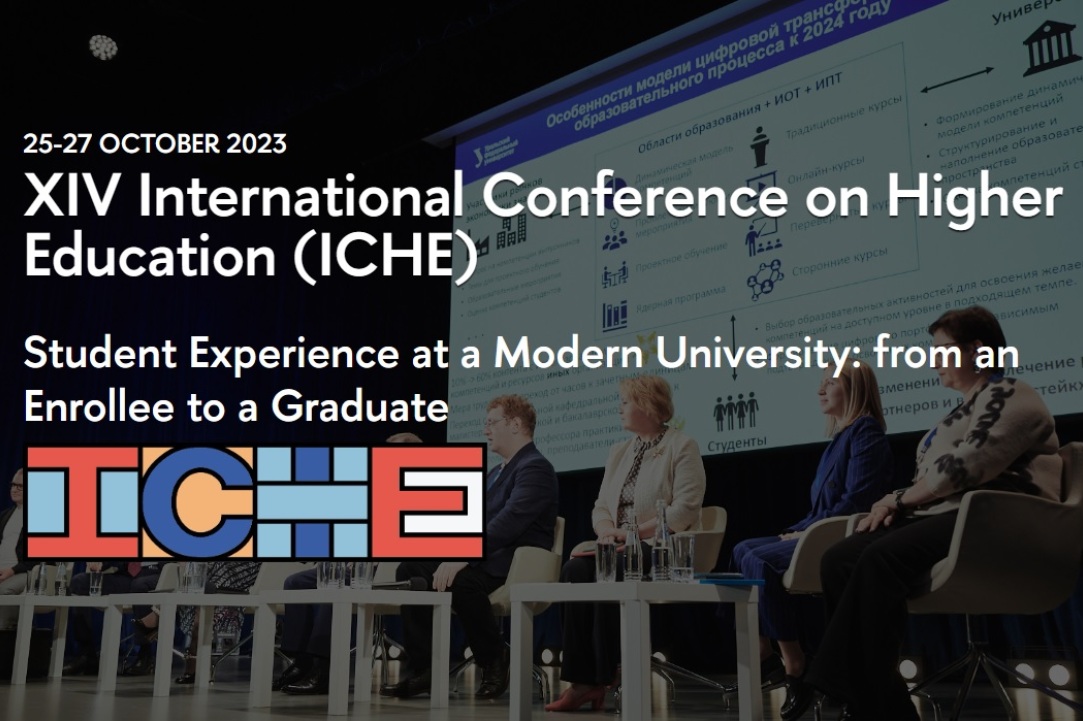
As its central theme, the conference focused on finding a balance between upholding high academic standards at universities and promoting the well-being of both students and faculty. The first plenary session examined the phenomenon of student families, with conference participants discussing how these families fit into the broader demographic context and proposing measures to support them.

Redefining School Leadership: Lessons from the Pandemic

Redefining School Leadership: Lessons from the Pandemic
In the wake of the COVID-19 pandemic, the landscape of educational leadership has been irrevocably altered. School principals, once predominantly focused on political maneuvering within the educational sphere, have had to swiftly adapt to a new set of challenges and priorities.

In this study, Nazir Ahmed Jogezai and Fozia Ahmed Baloch explore the transformative journey of school leaders during and after the pandemic, highlighting how their leadership styles have evolved from a primarily political frame to a blend of symbolic and political approaches.

Does Higher-Order Thinking Boost Student Satisfaction?

Does Higher-Order Thinking Boost Student Satisfaction?
Student satisfaction is crucial for universities aiming to improve education and keep students engaged. Irina Shcheglova, Jamie Costley, Elena Gorbunova, and Christopher Lange delve into whether tasks that require higher-order thinking skills (HOTS) make students more satisfied with their academic experiences.

Galvanizing the 'Shock Innovation' in Education: Lessons from the COVID-19 Pandemic

Galvanizing the 'Shock Innovation' in Education: Lessons from the COVID-19 Pandemic
In the wake of the COVID-19 pandemic, education systems worldwide underwent an unprecedented transformation, propelled by the urgent need for digital solutions. A study by Diana Koroleva and Anastasia Andreeva explores this phenomenon through the concept of ‘Shock Innovation,’ shedding light on how crises can accelerate technological adoption in education.

How Family Cultural Capital Is Related to Study Abroad Participation: Insights from First-Generation U.S. College Students

How Family Cultural Capital Is Related to Study Abroad Participation: Insights from First-Generation U.S. College Students
A recent study by Dr. Radomir Ray Mitic, a 2019 recipient of an IOE SemyonovAward fellowship in higher education research, delves into the intricate dynamics shaping study abroad decisions among first-generation U.S. college students. The research offers compelling insights into the pivotal role of family cultural capital. Leveraging data from the Educational Longitudinal Survey (ELS: 2002), Dr. Mitic analyzes precollege and college-related factors influencing students' propensity to engage in international educational experiences.

Doctoral Diversities: Unveiling Experiences Through the Departmental Climate Lens

Doctoral Diversities: Unveiling Experiences Through the Departmental Climate Lens
Doctoral programs across the globe face a myriad of challenges, and one particularly intricate puzzle involves the diverse landscape of their student body. This diversity spans across dimensions like age, socioeconomic background, motivation, and career aspirations, injecting a rich tapestry of perspectives into the academic realm. Despite these shifts, doctoral programs often find themselves grappling with the task of adapting swiftly to this evolving environment. In their study, Natalia Maloshonok and Saule Bekova delve into the fascinating concept of 'departmental climate' to unravel how Russian university doctoral students perceive their academic surroundings.