Institute of Education

Research & Expertise to Make a Difference in Education & Beyond

Tag "research projects"

Slow and Steady Wins the Race: How Adult Learners Manage Time and Achieve Success

AI
In a world where deadlines loom and procrastination tempts, a group of researchers—Kseniya Adamovich, Aleksandra Getman, Anastasia Kapuza, and Adelina Fayzullina—set out to uncover the secrets of how adult learners tackle their assignments. Their study, published in The Language Learning Journal, dives into the habits of over 70,000 English learners on an online platform, revealing surprising truths about time management, task completion, and academic success. What they found challenges conventional wisdom and offers fresh insights into the age-old question: Does slow and steady really win the race?

Bridging the Digital Divide: Crafting a Legal Future for Global Digital Platforms

AI
In their recent study, Alexey Koshel, Yaroslav Kuzminov, Ekaterina Kruchinskaia, and Bogdan Lesiv of HSE University unravel the complex challenge of regulating digital platforms across jurisdictions. Their paper, In Search of the Regulatory Optimum for Digital Platforms: A Comparative Analysis, sets out not only to dissect the legislative frameworks of key global economies but also to propose a more coherent legal language for Russia’s rapidly evolving platform economy.

The Replay Dilemma: Unraveling the Secrets of Video Lectures in Online Learning

AI
In the ever-evolving world of education, where Massive Open Online Courses (MOOCs) have become a beacon of accessibility and innovation, a team of researchers—Muhammed Shittu, Anna Gorbunova, Christopher Lange, and Jamie Costley—embarked on a quest to decode a peculiar phenomenon: Why do students re-watch video lectures? Their study, published in the Electronic Journal of e-Learning, dives deep into the intricate dynamics of video lecture design and its impact on student engagement. With insights drawn from over 1,500 surveys conducted at South Korea’s Open Cyber University (OCU), the researchers uncover the hidden forces that compel learners to hit the replay button.

The Stories We Live: How Time Shapes Our Actions and Decisions

The Stories We Live: How Time Shapes Our Actions and Decisions
Narratives We Live By: Sequentiality and Timeliness in Temporal Structuring of Action, a recent study by sociologist and cultural theorist Dmitry Kurakin, delves into the intricate ways narratives shape human behavior over time. Published in Theory and Society, the paper bridges theoretical innovation with empirical analysis, offering a fresh perspective on how individuals navigate the interplay between personal timelines and societal expectations.

Echoes of the Past, Divergent Futures: Charting the Shifting Landscape of After-School Education in Post-Soviet Nations

Echoes of the Past, Divergent Futures: Charting the Shifting Landscape of After-School Education in Post-Soviet Nations
In his 2025 study published in Compare: A Journal of Comparative and International Education, Ivan Ivanov of IOE’s Pinsky Center of General and Extracurricular Education delves into the complex evolution of children's after-school activities across the vast expanse of the fifteen former Soviet republics. The research uncovers the multifaceted journeys these nations have embarked upon since the dissolution of a once-unified system, painting a vivid picture of continuity, divergence, and the persistent quest to shape young lives outside the formal classroom.

Staying Home or Venturing Out: Academic Inbreeding and the Success of Early-Career Researchers

Staying Home or Venturing Out: Academic Inbreeding and the Success of Early-Career Researchers
In her recent study, Victoria Slepykh of IOE delves into the contentious issue of academic inbreeding and its impact on the productivity of early-career researchers in STEM fields. Academic inbreeding, the practice of scholars working at the same institutions where they earned their degrees, has long been debated for its potential to stifle innovation and limit intellectual diversity. This research offers a nuanced perspective, exploring how this phenomenon plays out in Russia’s diverse academic landscape, where inbreeding is notably prevalent.

HSE’s Education Observatory Establishes Research Network Across All BRICS Countries

HSE’s Education Observatory Establishes Research Network Across All BRICS Countries
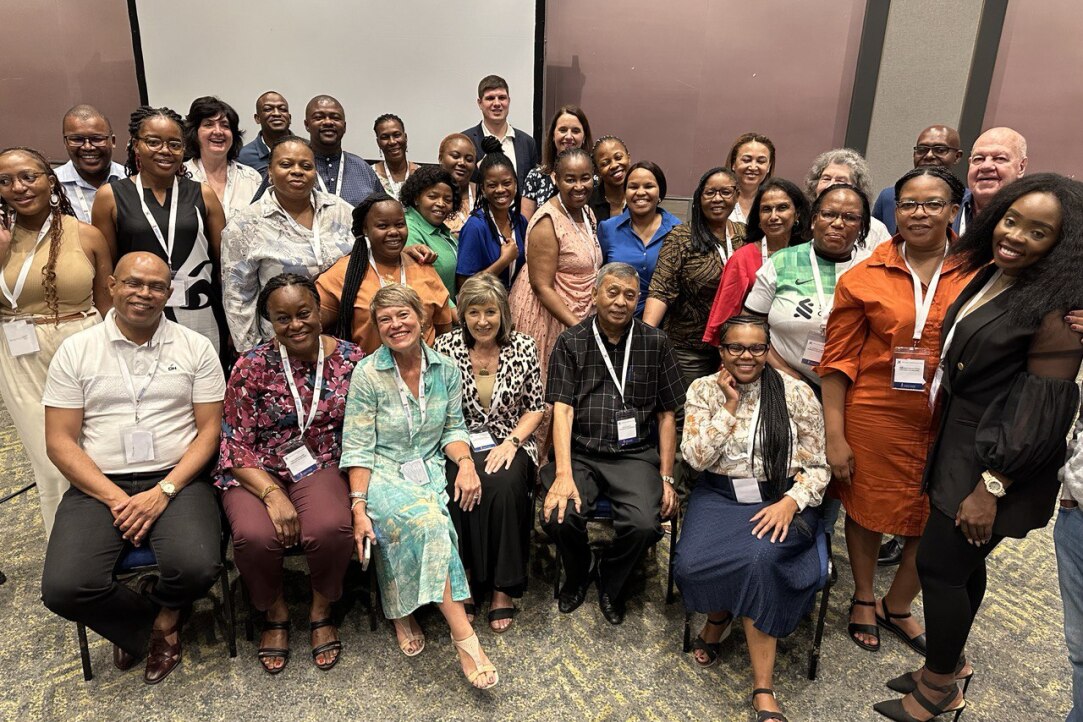
The International Education Observatory initiative, launched by HSE University to focus on expert evaluation, analytics, and joint scientific research, has successfully completed the formation of a research network across all BRICS nations. South Africa was the final link, with the University of Pretoria and the University of the Witwatersrand joining experts from Russia, China, India, and Brazil. 

Youth on the Edge: Navigating the Bumpy Road to Adulthood

AI
In a fiercely polarized, starkly unequal world, more young people have found themselves struggling as they navigate a path into an adult life of meaning and impact. Drawing on the theoretical frameworks of prefiguration and resilience, a study by Anastasiia Andreeva, Elena Omelchenko, and Pavel Sorokin highlights the diverse ways in which young people in Russia respond to the uncertainties shaping their lives.

Tickling the Nerves: Why Crime Content is Popular

Tickling the Nerves: Why Crime Content is Popular
Consumers of content about serial killers watch and read it to experience intense emotions that are often lacking in everyday life and to understand the reasons that drive people to commit crimes. However, such content does not contribute to increased aggression. These conclusions were drawn by sociologists from HSE University. The results of their study have been published in Crime, Media, Culture: An International Journal.

Locked Down but Not Defeated: A Global Snapshot of Adolescent Wellbeing During COVID-19

Locked Down but Not Defeated: A Global Snapshot of Adolescent Wellbeing During COVID-19
The COVID-19 pandemic brought about sweeping changes to daily life across the globe, none more so than for young people whose worlds were turned upside down by lockdowns, school closures, and social distancing measures. In the thick of these unprecedented disruptions, a critical question emerged: How did these abrupt changes affect the wellbeing of adolescents—those in the midst of pivotal developmental years? A study by an international research team, including Alexandra Bochaver of IOE, offers enthralling insights into the impact of the COVID-19 lockdown on school students' psychological, emotional, and social wellbeing, shedding light on both the challenges they faced and their capacity to adapt. By examining the complexities of adolescent wellbeing during such a tumultuous time in a global context, it underpins the importance of understanding how external crises influence the mental and social health of young people and the need for continued support in the face of such challenges.