Institute of Education

Research & Expertise to Make a Difference in Education & Beyond

Research & Expertise

Fair or Flawed? Generative AI Bias Perceptions from Tweets to Teams

AI
In their recent study, Evans Uhunoma and Maryann Asemota delve into how users perceive bias in generative AI outputs across two distinct contexts: the workplace and public discourse on social media. Drawing on survey data from UK-based employees and sentiment analysis of posts on X (formerly Twitter), the authors examine the extent to which generative AI systems—commonly regarded as innovative tools for content creation—may in fact reproduce or amplify existing societal biases. 

Teen Agency: How Young Minds Push Boundaries, Break Rules, and Seek Meaning

AI
In a world marked by instability—from global pandemics to shifting political landscapes—young people are increasingly called upon to act, not just react. But what gives teenagers the power to step forward, make their voices heard, and shape their own futures? A new study by Mikhail Goshin, Dmitry Grigoryev, and Pavel Sorokin takes a fresh look at this question through a psychological lens, offering a nuanced picture of adolescent agency and how it links to conformity, rebellious behavior, and a hunger for intellectual challenge.

HSE’s Education Observatory Establishes Research Network Across All BRICS Countries

HSE’s Education Observatory Establishes Research Network Across All BRICS Countries
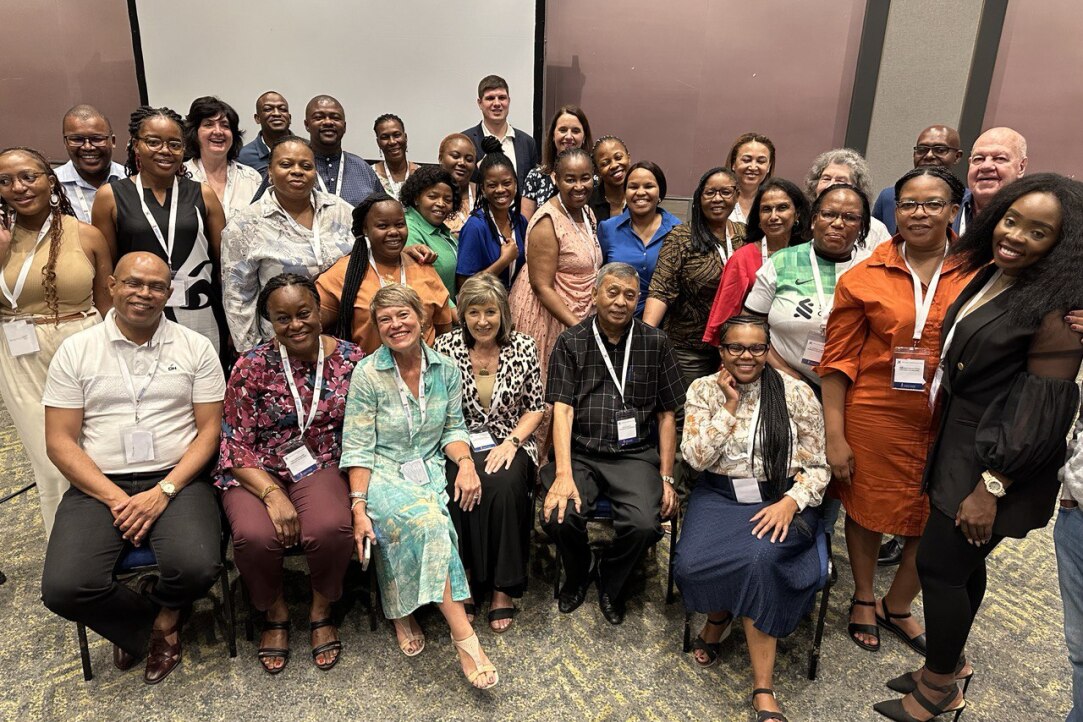
The International Education Observatory initiative, launched by HSE University to focus on expert evaluation, analytics, and joint scientific research, has successfully completed the formation of a research network across all BRICS nations. South Africa was the final link, with the University of Pretoria and the University of the Witwatersrand joining experts from Russia, China, India, and Brazil. 

Youth on the Edge: Navigating the Bumpy Road to Adulthood

AI
In a fiercely polarized, starkly unequal world, more young people have found themselves struggling as they navigate a path into an adult life of meaning and impact. Drawing on the theoretical frameworks of prefiguration and resilience, a study by Anastasiia Andreeva, Elena Omelchenko, and Pavel Sorokin highlights the diverse ways in which young people in Russia respond to the uncertainties shaping their lives.

Tickling the Nerves: Why Crime Content is Popular

Tickling the Nerves: Why Crime Content is Popular
Consumers of content about serial killers watch and read it to experience intense emotions that are often lacking in everyday life and to understand the reasons that drive people to commit crimes. However, such content does not contribute to increased aggression. These conclusions were drawn by sociologists from HSE University. The results of their study have been published in Crime, Media, Culture: An International Journal.

Pioneering Psychometrics-Based Assessment of Large Language Models in Education

Pioneering Psychometrics-Based Assessment of Large Language Models in Education
In the rapidly evolving landscape of artificial intelligence, understanding the capabilities and limitations of large language models (LLMs) in specialized fields such as education is crucial. A study by Elena Kardanova, Alina Ivanova, Ksenia Tarasova, Taras Pashchenko, Aleksei Tikhoniuk, Elen Yusupova, Anatoly Kasprzhak, Yaroslav Kuzminov, Ekaterina Kruchinskaia, and Irina Brun, introduces a novel psychometrics-based methodology to assess LLM performance in the field of pedagogy. By focusing on the educational domain and developing a robust benchmark tailored for LLM evaluation, the authors offer new insights into the strengths and weaknesses of these models.

Active vs. Passive Teaching in Close-up: Implications for Student Success at University

Active vs. Passive Teaching in Close-up: Implications for Student Success at University
In an era where the demand for innovative educational strategies is paramount, the effectiveness of teaching methods in fostering student learning has come under scrutiny. A recent study by Evgeniy Terentev, Irina Shcheglova, Denis Federiakin, Yuliya Koreshnikova, and Jamie Costley delves into the contrasting realms of active and passive teaching approaches within the context of economics and management education at a leading Russian university. By examining how these teaching methodologies influence student performance across various cognitive levels, the authors aim to shed light on the vital role of instructional practices in preparing students for success in an increasingly complex and competitive knowledge economy.

XV International Conference on Higher Education Held at HSE University

XV International Conference on Higher Education Held at HSE University
As its central theme, the conference focused on finding a balance between upholding high academic standards at universities and promoting the well-being of both students and faculty. The first plenary session examined the phenomenon of student families, with conference participants discussing how these families fit into the broader demographic context and proposing measures to support them.

Redefining School Leadership: Lessons from the Pandemic

Redefining School Leadership: Lessons from the Pandemic
In the wake of the COVID-19 pandemic, the landscape of educational leadership has been irrevocably altered. School principals, once predominantly focused on political maneuvering within the educational sphere, have had to swiftly adapt to a new set of challenges and priorities.

In this study, Nazir Ahmed Jogezai and Fozia Ahmed Baloch explore the transformative journey of school leaders during and after the pandemic, highlighting how their leadership styles have evolved from a primarily political frame to a blend of symbolic and political approaches.

Does Higher-Order Thinking Boost Student Satisfaction?

Does Higher-Order Thinking Boost Student Satisfaction?
Student satisfaction is crucial for universities aiming to improve education and keep students engaged. Irina Shcheglova, Jamie Costley, Elena Gorbunova, and Christopher Lange delve into whether tasks that require higher-order thinking skills (HOTS) make students more satisfied with their academic experiences.