Institute of Education

Research & Expertise to Make a Difference in Education & Beyond

Research & Expertise

Can Youth Bullying Ever Be Eradicated?

Dr. Dorothy Espelage
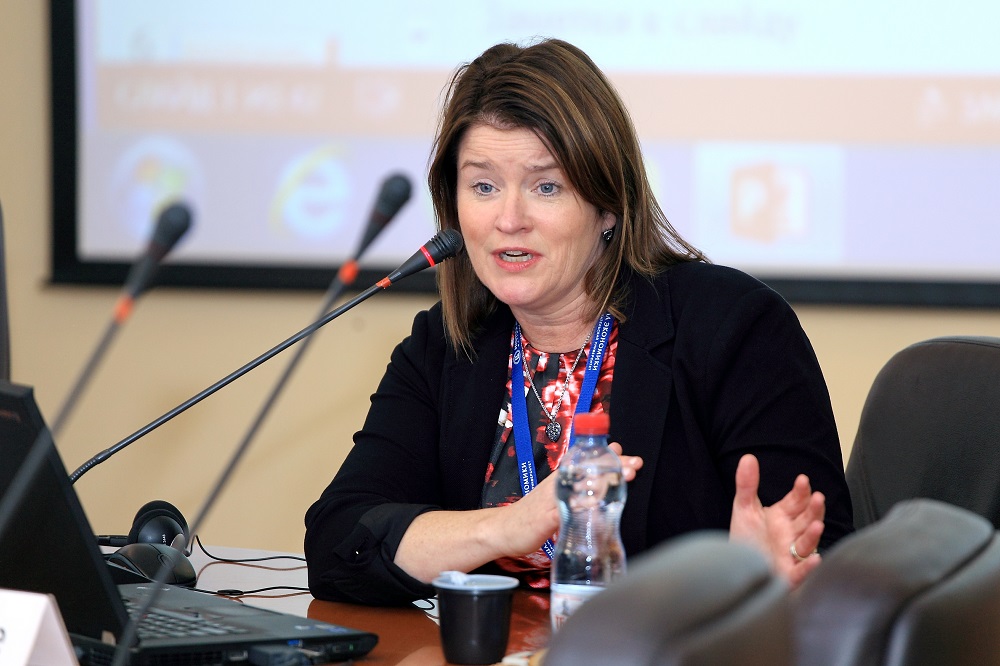
Dr. Dorothy Espelage (University of Florida) presented a comprehensive account of her research into youth bullying spanning more than two decades in an invited paper ‘Prevention & Intervention of Youth Bullying and other Forms of Youth Aggression: Research Informed Strategies’ at the XX April International Academic Conference.

Too Much Thought: Can We Better Counter Redundant Publications?

Too Much Thought: Can We Better Counter Redundant Publications?
In their commentary featured in International Higher Education, Philip G. Altbach and Hans de Wit of the Center for International Higher Education at Boston College (USA), IOE’s long-standing partner for a vast academic agenda, reflect on the main reasons behind the growing spate of redundant research publications and what needs to be done to rectify the trend.

How Child’s Phonological Ability Impacts Their Aptitude in Math

How Child’s Phonological Ability Impacts Their Aptitude in Math
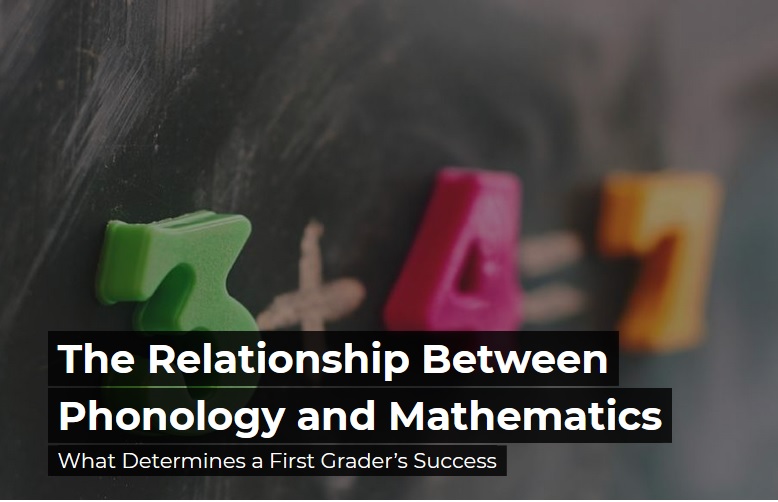
A recent study by IOE experts Alina Ivanova, Diana Kaiky and Yulia Kuzmina finds a link between the phonological ability of school starters (e.g., sensitivity to the sound composition of speech, the ability to identify individual sounds and syllables, etc.) and their capacity in math. The socio-economic status of the child’s family turns out to be an important modulator in the phonology–math relationship, the study suggests.

Leading Education Reforms that Make a Difference

There is never a single-model approach or uniform guidance as to how an educational leader should best proceed to spearhead reforms that can spark positive change to benefit multiple realms and stakeholder groups. Letters to a New Minister of Education, a volume edited by Dr. Fernando M. Reimers that has recently been out in the U.S., shares a deep well of cross-country experience in how to make sustainable transformations in education come about.

Understanding Academic Dishonesty at Russian Universities

One common problem across educational systems worldwide is persistently high rates of cheating, plagiarism and other manifestations of dishonest behavior in the academic realm. A recent study by IOE researchers Natalia Maloshonok and Evgeniia Shmeleva seeks to gain new and more conclusive insights into what essentially propels Russian students to engage in unethical academic practices during their university track.

How Gender Inequality Is Reproduced on Social Media

How Gender Inequality Is Reproduced on Social Media
IOE researchers Elizaveta Sivak and Ivan Smirnov have analyzed over 60 million public posts on VK, the most popular Russian social networking site, to discover that both men and women mention sons more often than daughters. They have also found that posts featuring sons receive 1.5 times more likes. The results have been published in the Proceedings of the National Academy of Sciences of the United States of America.

HSE Establishes Semyonov Award for Early-career International Researchers

Dmitry Semyonov
Semyonov Award is designed as an internship at the HSE Laboratory for University Development and support to early-career scholars for participation in joint research.

Children Perform Better When Parents Are Involved in School Life

A family’s involvement in a child’s education acts as a source of social mobility, according to a study by Mikhail Goshin and Tatyana Mertsalova, experts at the IOE Centre for Socio-economic Aspects of Schooling. Lower income parents who actively participate in their children’s school life open up more opportunities for their children.

International Experts Discuss Strategies to Lead the Way in Effective Multi-level Governance in Education

In November, IOE welcomed a cohort of top-notch law & policy experts from the U.S., Russia, Poland, Belgium, South Africa and Germany for the first international conference, ‘Multi-level Governance in Education: Top-down Governance, Transfer of Authority, and Regional Cooperation.’ A joint initiative between IOE and the ‘EduLaw’ (Erasmus+ Mundus – Curriculum Development) project, the event featured multi-prism debate about how more justified central–local power schemas in education can be devised as an important condition for shaping more effective, equity-centric L&D environments.

Exploring Novelty Perspectives in Human Capital Theory and Education

On October 5–7, Hakone, Japan hosted the 2018 Conference of Asia Pacific Sociological Association (APSA), the largest forum for multifaceted social scholarship in the Pacific Rim region. Senior researcher Pavel Sorokin, Academic Supervisor in IOE’s Evidence-based Educational Policy MA, presented at the event about a recent study he carried out together with IOE Head Isak Froumin, which aims to largely rethink the conceptual framework of human capital.